Malik’s footage of the school incident
On the Come UpMalik’s footage of the school incident is the only recording identified as capturing the entire encounter between Brianna and Midtown security, including what happened before she was on the ground. That difference makes it more than a record: the video could contest the rumor used to excuse the guards’ actions, but its circulation could also expose Brianna to a public spectacle she does not want. The footage becomes a focal point for the novel’s conflict over who gets to define an event, who is believed, and whether visibility can be turned into change without taking control away from the person at its center.
Recording the Incident
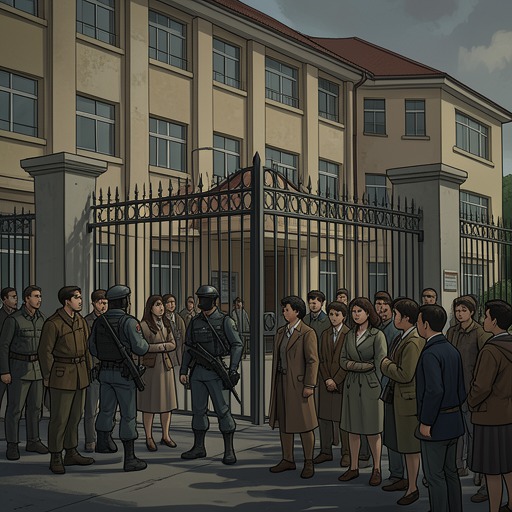
Malik has his camera out and pointed at the confrontation when Officer Tate orders him to put it away. He refuses, insisting that he can record if he wants. The footage’s significance becomes clear as the confrontation escalates: Officer Long accuses Brianna of bringing something into school, takes her bag, and wraps plastic around her wrists. Brianna cannot respond. The account establishes both the recording’s immediate context and its contrast with the guards’ accusation: the camera documents an encounter in which a security officer treats suspicion as grounds to restrain her.
The difference between Malik’s footage and the other recordings is crucial. Brianna later learns that someone at school has uploaded a clip of Officer Long and Officer Tate pinning her down, but that video begins only after she is already on the ground. It is titled “Drug dealer caught at MSOA,” turning an incomplete image into a damaging claim about her. Malik tells her that he recorded the entire incident. His account of the footage gives it evidentiary force: it can show that Brianna did not do anything to deserve what the guards did, while exposing the rumor as a way of justifying their conduct.
Evidence and Its Risks
Malik proposes posting the footage online, but Brianna does not welcome the idea of becoming the public face of the incident. When the possibility arises that she might speak out, she objects to being made the “poster child.” Her resistance is not a denial of what the video shows; she is wary of what publication would make her endure. She imagines the clip circulating through news and social media, watched widely before attention shifts to another incident involving a Black person. In her view, virality may produce spectacle and then forgetfulness, not durable change. Her family’s lack of heat also makes public advocacy feel distant from the immediate pressures she has to manage.
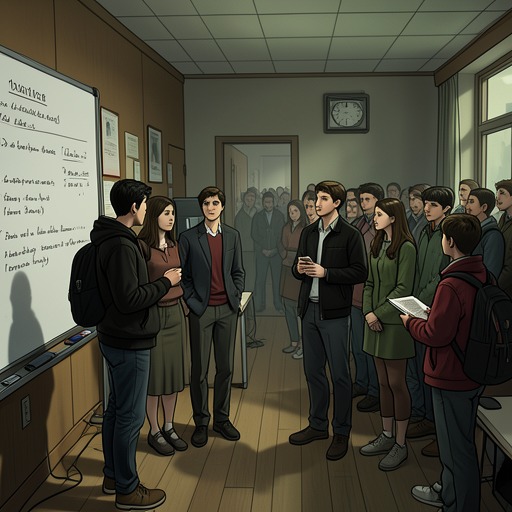
Malik argues that the footage gives her a chance to do something: if it is released and she speaks, it might change conditions at Midtown. Brianna counters that he could speak up himself. Their disagreement is about more than whether the recording is useful. Malik sees its completeness as a means to challenge the rumors and confront the school; Brianna sees the prospect of publication as another demand that she surrender control over how she is seen. The footage can correct a misleading account, but it cannot guarantee that audiences will respond fairly or that attention will last.
Public Images and Labels
The incident’s competing recordings show how framing can alter what a viewer thinks they are seeing. The clip labeled “Drug dealer caught at MSOA” leaves out what happened before Brianna was on the ground, yet circulates with a headline that presents the accusation as fact. Malik’s longer recording offers a counter-account, but Brianna remains conscious that any widely shared video makes her visible on terms set by others. The difference is not simply between an inaccurate clip and an accurate one: it is also between being represented by a fragment and being asked to live through the circulation of a fuller record.
This struggle over images echoes the language imposed on Brianna during the incident. Officer Long calls her a hoodlum, a label she later turns over in her mind and rejects. The false drug-dealer caption renews the same process in a new medium: a description attached to her image can shape how other people interpret both her and the guards’ actions. The video’s evidentiary value therefore exists alongside the risk that audiences will continue to read Brianna through labels rather than through the events the footage records.
From Recording to Self-Representation
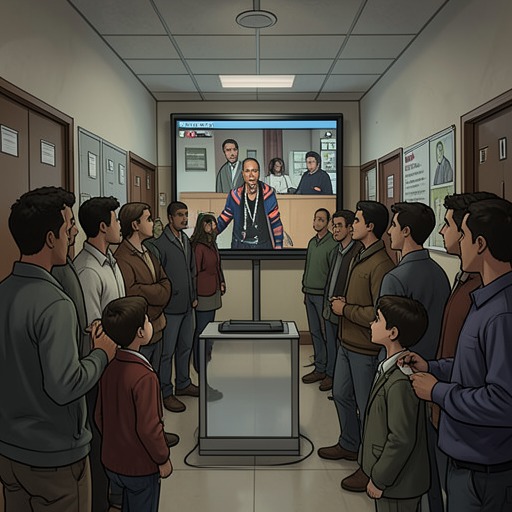
The pressure to control an image recurs as Brianna’s music reaches larger audiences. Blackout features her photograph from the Ring and promotes her song without using her name in its headline. Later, school officials and television coverage connect students’ chanting of her lyrics with violence, treating the song as evidence about her and its listeners. These episodes are not the same as Malik’s recording, but they extend the underlying conflict: a public image or performance can be taken out of its context and made to support a story Brianna did not choose.
In a later performance, Brianna answers the demand to be defined by others by delivering words of her own. She rejects being a puppet or a clone and insists that she will not perform words that are not hers. The moment supplies a contrast to the school video: in each case, a recording can carry an account beyond its immediate setting, but the meaning is shaped by who controls the words and framing. Malik’s footage could preserve the fuller circumstances of the security encounter; Brianna’s own performance asserts her right to speak rather than be reduced to an image, rumor, or role. The evidence establishes that Malik offers to post the footage, not that Brianna accepts his proposal or that it is ultimately released.